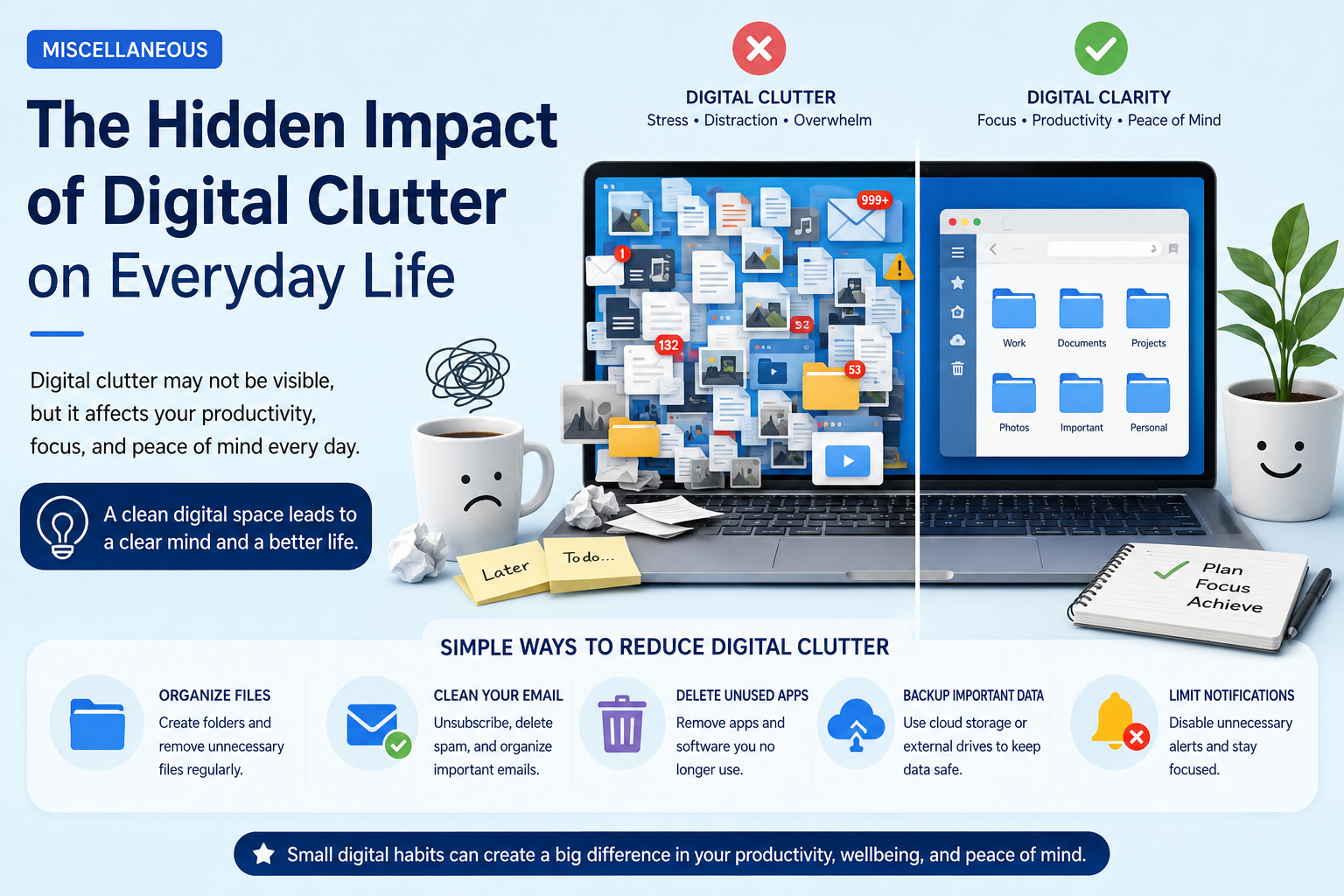
In today’s fast-paced digital world, people spend hours every day using smartphones, laptops, tablets, and cloud platforms. While technology has made life easier, it has also created a new kind of problem — digital clutter. From thousands of unread emails to duplicate files and endless screenshots, digital mess can slowly affect productivity, focus, and even mental wellbeing.
Many people organize their homes and workplaces regularly, but often ignore the digital environment they interact with daily. Over time, this invisible clutter builds up and creates unnecessary stress.
Digital clutter refers to unnecessary or disorganized digital content stored across devices and online platforms. This can include:
Although these may seem harmless individually, together they create confusion and reduce efficiency.
Searching for important files among hundreds of random documents wastes valuable time. Constant notifications and overloaded desktops can distract users from important tasks.
A messy digital workspace can feel mentally exhausting. Seeing thousands of unread emails or scattered files may create anxiety and make tasks feel overwhelming.
Storage overload can reduce device speed and performance. Old applications running in the background consume memory and battery life.
Unused accounts, outdated software, and forgotten files may expose sensitive information and increase cybersecurity risks.
Create clearly labeled folders and remove unnecessary files every week. Keeping documents categorized makes them easier to find.
Unsubscribe from unwanted newsletters and delete spam messages. Use folders or labels to organize important emails.
Remove apps and software you no longer use. This improves storage space and device performance.
Use cloud storage or external drives to secure important files while keeping devices clutter-free.
Disable unnecessary notifications to reduce distractions and improve concentration.
Digital wellbeing is becoming increasingly important in modern lifestyles. Maintaining a clean and organized digital environment can improve focus, reduce stress, and help people use technology more effectively.
Small habits such as organizing files, limiting screen time, and managing online activities can make a significant difference in both personal and professional life.
Digital clutter may not be physically visible, but its impact on daily life is real. A well-organized digital space improves productivity, enhances device performance, and creates a healthier relationship with technology. By adopting simple digital organization habits, individuals can enjoy a more focused, efficient, and stress-free lifestyle in the modern digital age.