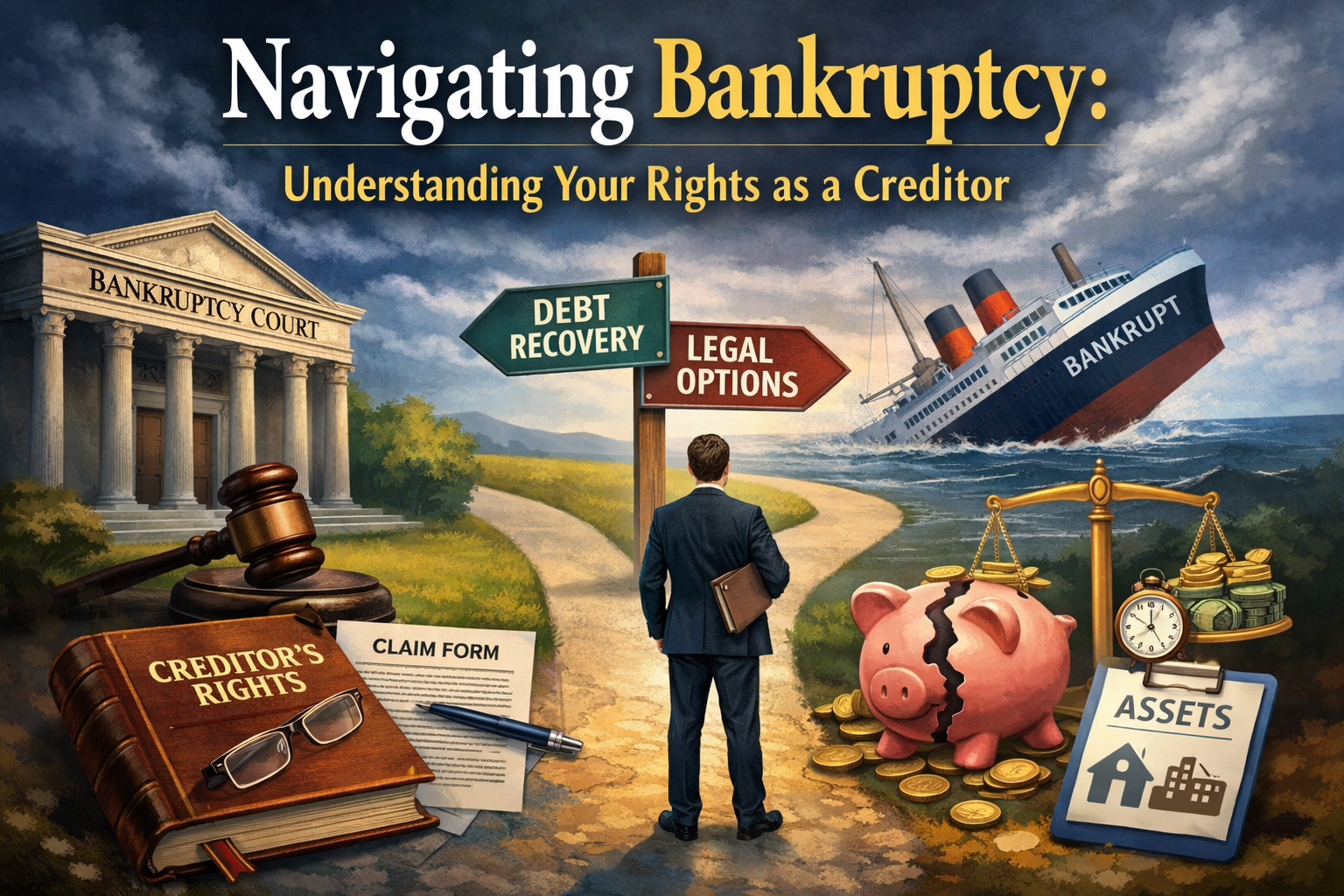
Bankruptcy can be a daunting and complex process for both debtors and creditors. As a creditor, it is important to understand your rights and options when a debtor files for bankruptcy. In this blog post, we will discuss the key aspects of navigating bankruptcy as a creditor and provide guidance on how to protect your interests.
Understanding the Bankruptcy Process
When a debtor files for bankruptcy, they are seeking protection from their creditors and a chance to reorganize or discharge their debts. There are different types of bankruptcy, including Chapter 7, Chapter 11, and Chapter 13, each with its own rules and procedures. As a creditor, it is important to familiarize yourself with the bankruptcy process and understand how it may impact your ability to collect on the debt owed to you.
Filing a Proof of Claim
One of the first steps in navigating bankruptcy as a creditor is to file a proof of claim with the bankruptcy court. This document outlines the amount of money owed to you by the debtor and provides supporting documentation to substantiate your claim. Filing a proof of claim is essential to ensure that you have a say in the distribution of assets in the bankruptcy case. Failure to file a proof of claim may result in you not receiving any payment from the debtor's bankruptcy estate.
Attending Meetings of Creditors
As a creditor, you may be required to attend meetings of creditors as part of the bankruptcy process. These meetings provide an opportunity for creditors to ask questions and raise concerns about the debtor's bankruptcy case. It is important to attend these meetings and actively participate in the process to protect your interests. Additionally, creditors may have the opportunity to form a creditors' committee to represent their interests in the bankruptcy case.
Challenging Dischargeability of Debt
In some cases, creditors may have grounds to challenge the dischargeability of debt in a debtor's bankruptcy case. This may be due to fraud, misrepresentation, or other factors that make the debt ineligible for discharge. As a creditor, it is important to work with legal counsel to evaluate whether there are grounds to challenge the dischargeability of debt and take appropriate action to protect your rights.
Enforcing Your Rights as a Creditor
If a debtor fails to comply with the terms of their bankruptcy case or if you believe that your rights as a creditor are being violated, you may have the option to enforce your rights through the bankruptcy court. This may involve seeking relief from the automatic stay, objecting to the debtor's plan of reorganization, or taking other legal action to protect your interests. It is important to work with experienced legal counsel to navigate the complexities of enforcing your rights as a creditor in a bankruptcy case.
In conclusion, navigating bankruptcy as a creditor can be a challenging process, but it is important to understand your rights and options to protect your interests. By familiarizing yourself with the bankruptcy process, filing a proof of claim, attending meetings of creditors, challenging dischargeability of debt when necessary, and enforcing your rights as a creditor, you can navigate bankruptcy with confidence and work towards a favorable outcome for your business.