When starting a new business, one of the most important decisions you will need to make is choosing the right business structure. Two common options for small businesses are Limited Liability Companies (LLCs) and Corporations. Both offer distinct advantages and disadvantages, so it's important to carefully consider which structure is best for your specific needs.
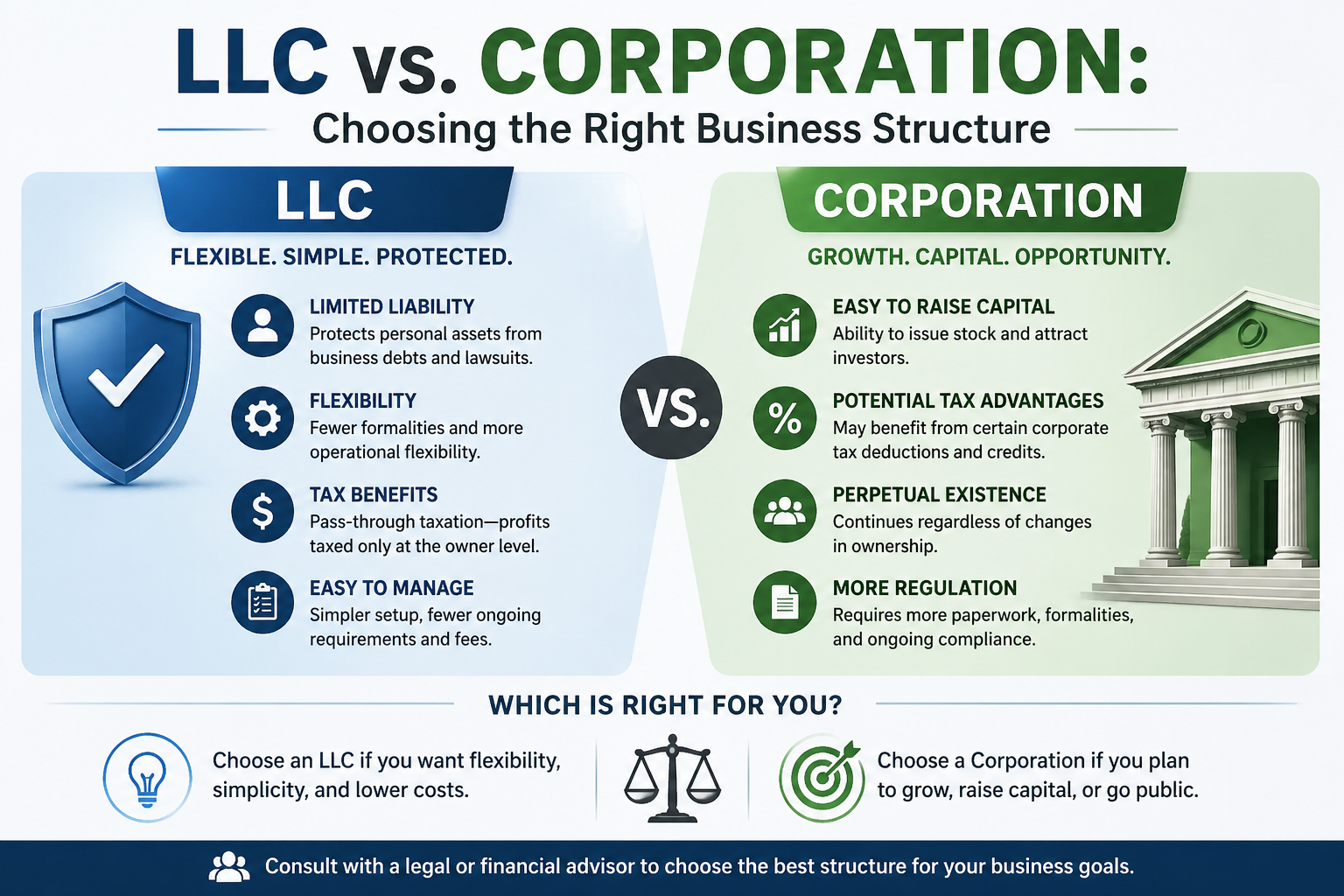
Limited Liability Companies (LLCs) are a popular choice for small businesses because they offer the limited liability protection of a corporation, but with the flexibility and simplicity of a partnership. This means that the owners of an LLC are not personally liable for the debts and liabilities of the business, which can help protect their personal assets in the event of a lawsuit or bankruptcy. Additionally, LLCs are not subject to the same strict formalities and regulations as corporations, making them easier to set up and maintain.
On the other hand, Corporations are a more traditional business structure that offers certain advantages, such as the ability to raise capital through the sale of stock and the potential for greater tax benefits. However, corporations are also subject to more regulations and formalities, such as holding regular board meetings and keeping detailed records of financial transactions. Additionally, owners of a corporation may be subject to double taxation, meaning that the corporation itself is taxed on its profits, and then the owners are taxed again on any dividends they receive.
When deciding between an LLC and a Corporation, it's important to consider your long-term goals for the business. If you plan on seeking outside investors or eventually going public, a Corporation may be the better option due to its ability to issue stock. However, if you prefer a more flexible and less formal business structure, an LLC may be the better choice.
Another important factor to consider when choosing between an LLC and a Corporation is the cost and complexity of setting up and maintaining each structure. LLCs are generally easier and less expensive to establish, with fewer ongoing requirements and fees. Corporations, on the other hand, require more paperwork and formalities, which can be time-consuming and costly.
In conclusion, choosing the right business structure is a crucial decision that can have a significant impact on the success of your business. Both LLCs and Corporations offer distinct advantages and disadvantages, so it's important to carefully consider your specific needs and long-term goals before making a decision. Consulting with a legal or financial advisor can also help ensure that you choose the best structure for your business.