
blog

International Relations: Building a Connected and Collaborative World

Introduction

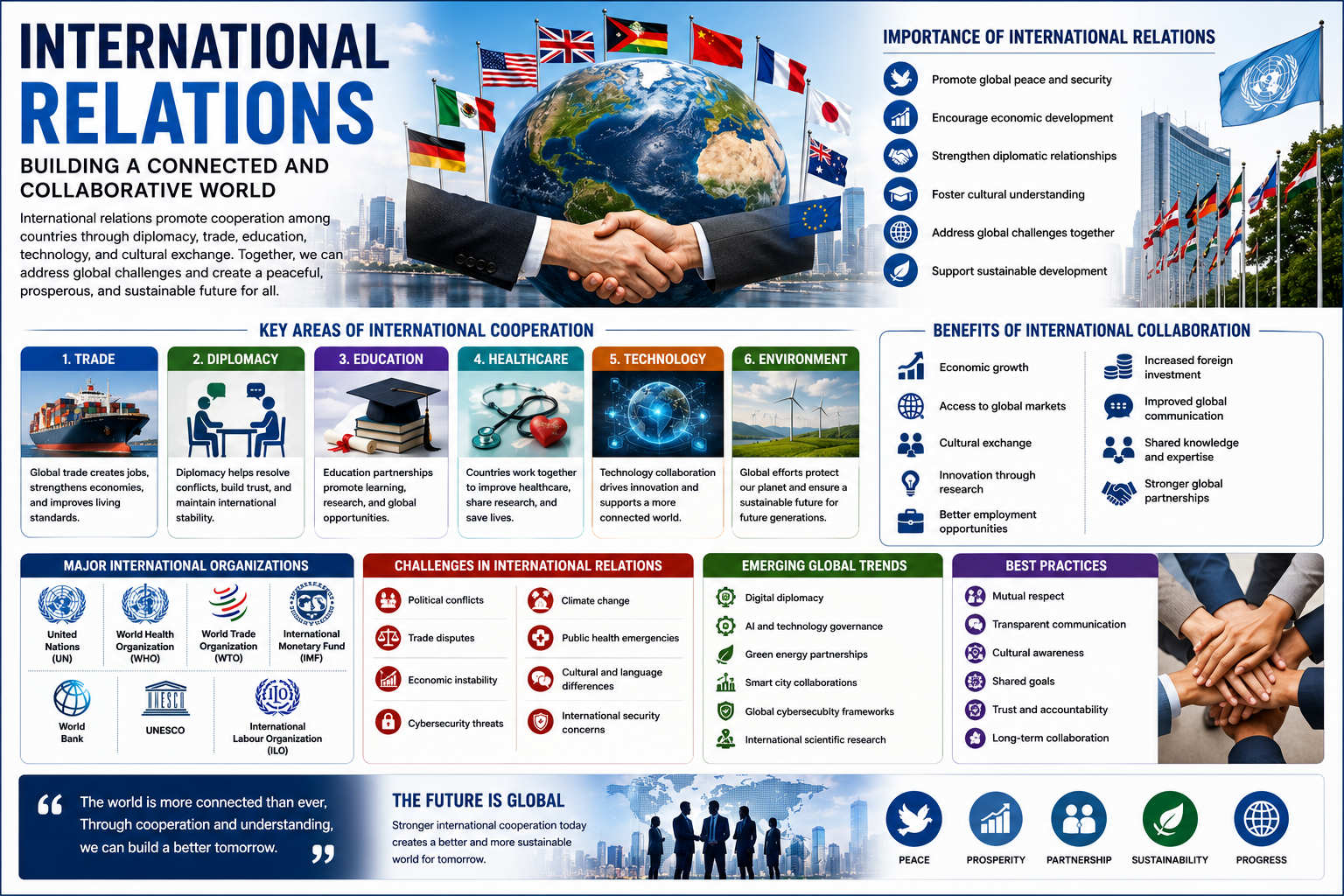
In today's interconnected world, international cooperation has become more important than ever. Nations work together to promote peace, strengthen economies, protect the environment, and solve global challenges. Through diplomacy, trade, education, healthcare, and technological collaboration, countries create opportunities that benefit people across the globe. As globalization continues to expand, international partnerships remain essential for building a stable, prosperous, and sustainable future.

What Is International Relations?

International relations involve the political, economic, cultural, and social interactions between countries, international organizations, and global institutions. These relationships focus on cooperation, diplomacy, security, trade, and solving shared global challenges.

Importance of International Relations

International cooperation helps to:

  • Promote global peace and security
  • Strengthen diplomatic relationships
  • Encourage economic development
  • Expand international trade
  • Support technological innovation
  • Foster cultural understanding
  • Improve global healthcare
  • Address climate change collectively

Key Areas of International Cooperation

1. International Trade

Global trade enables countries to exchange goods and services, strengthen economies, create jobs, and improve living standards.

2. Diplomacy

Diplomatic relations help countries negotiate agreements, resolve conflicts peacefully, and maintain international stability.

3. Education

International educational programs encourage:

  • Student exchange programs
  • Academic partnerships
  • Research collaborations
  • Knowledge sharing
  • Global learning opportunities

4. Healthcare

Countries collaborate to:

  • Share medical research
  • Combat global diseases
  • Improve healthcare systems
  • Develop vaccines
  • Respond to health emergencies

5. Technology

Technology partnerships support:

  • Artificial Intelligence research
  • Digital transformation
  • Cybersecurity cooperation
  • Cloud computing
  • Innovation and scientific advancement

6. Environmental Protection

Global cooperation helps address:

  • Climate change
  • Renewable energy
  • Wildlife conservation
  • Sustainable development
  • Carbon emission reduction

Benefits of International Collaboration

Strong international partnerships provide numerous benefits:

  • Economic growth
  • Increased foreign investment
  • Access to international markets
  • Cultural exchange
  • Innovation through global research
  • Better employment opportunities
  • Improved global communication
  • Shared knowledge and expertise

Major International Organizations

Several organizations support international cooperation, including:

  • United Nations (UN)
  • World Health Organization (WHO)
  • World Trade Organization (WTO)
  • International Monetary Fund (IMF)
  • World Bank
  • UNESCO
  • International Labour Organization (ILO)

These organizations promote peace, development, education, health, labor standards, and economic cooperation.

Technology and Global Connectivity

Technology has transformed international communication through:

  • Video conferencing
  • Cloud collaboration platforms
  • Digital communication tools
  • Artificial Intelligence
  • Global e-commerce
  • Online education
  • Instant messaging applications

These technologies make international collaboration faster and more efficient.

Challenges in International Relations

Countries continue to face challenges such as:

  • Political conflicts
  • Trade disputes
  • Economic instability
  • Cybersecurity threats
  • Climate change
  • Public health emergencies
  • Cultural and language differences
  • International security concerns

Effective diplomacy and cooperation help overcome these challenges.

Best Practices for International Cooperation

Successful international partnerships are built through:

  • Mutual respect
  • Transparent communication
  • Cultural awareness
  • Shared goals
  • Trust and accountability
  • Long-term collaboration
  • Respect for international agreements

Emerging Global Trends

International cooperation is evolving through:

  • Digital diplomacy
  • Artificial Intelligence governance
  • Smart city collaborations
  • Sustainable development initiatives
  • Green energy partnerships
  • Global cybersecurity frameworks
  • International scientific research
  • Cross-border digital innovation

Future of International Relations

The future of international relations will be shaped by stronger global collaboration, technological innovation, and sustainable development. Countries will increasingly work together to address climate change, improve healthcare, enhance cybersecurity, and promote inclusive economic growth. Digital technologies will continue to strengthen international communication and cooperation across borders.

Conclusion

International relations are essential for creating a peaceful, connected, and prosperous world. Through diplomacy, trade, education, healthcare, technology, and cultural exchange, nations can solve global challenges and create opportunities that benefit future generations. Strong international partnerships will continue to play a crucial role in shaping a sustainable and collaborative future.
Share :