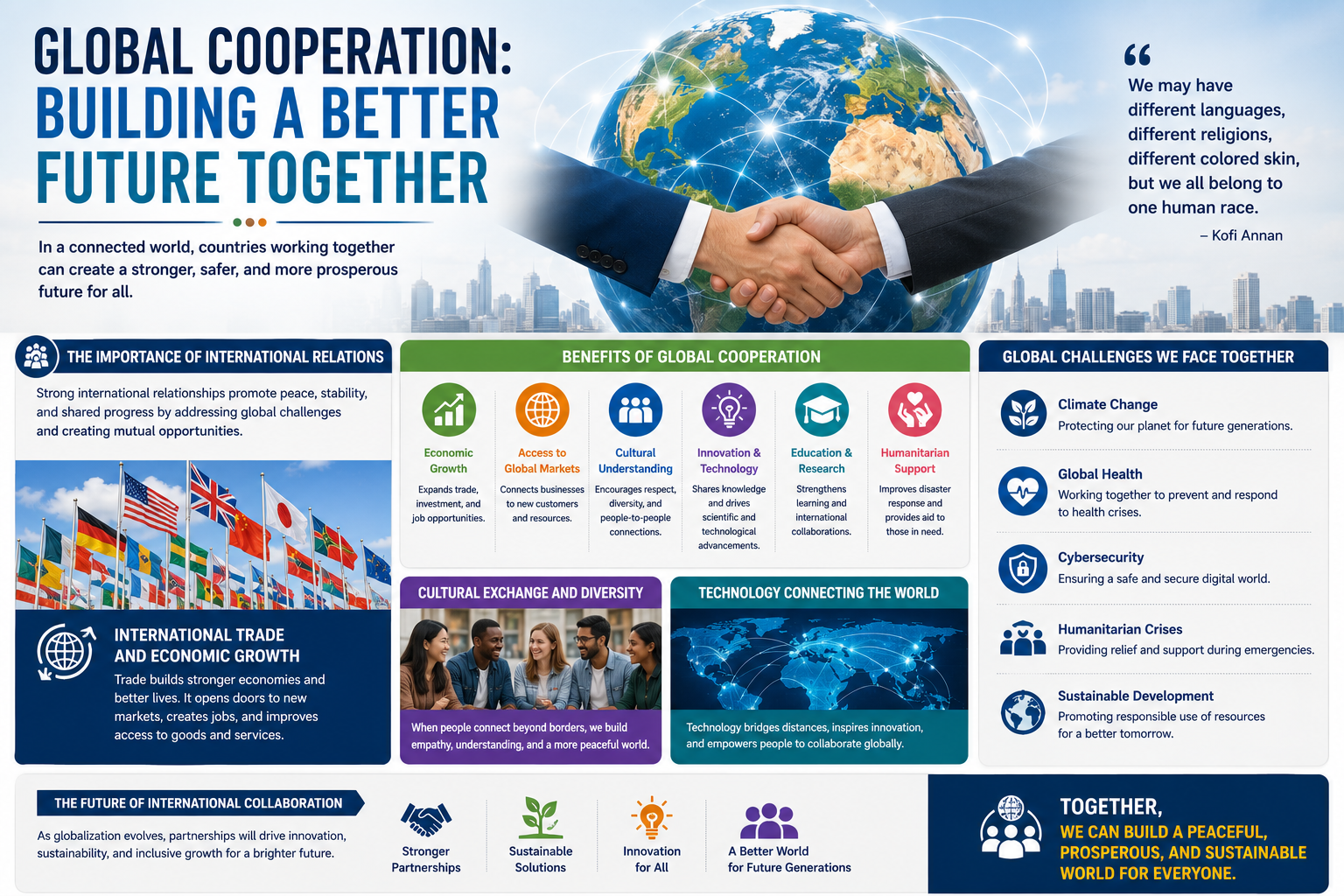
In an increasingly interconnected world, nations rely on one another more than ever before. Advances in technology, trade, transportation, and communication have created opportunities for countries to collaborate on issues that affect people worldwide. International cooperation plays a vital role in fostering peace, economic development, innovation, and sustainable progress.
Strong international relationships help countries work together to solve shared challenges and achieve common goals. Diplomatic partnerships, trade agreements, and global initiatives contribute to stability and mutual growth.
International collaboration offers many advantages, including:
Global trade allows countries to exchange goods, services, and resources efficiently. Businesses can reach new markets, consumers gain access to a wider range of products, and economies benefit from increased investment and job creation.
International engagement encourages people to learn about different cultures, traditions, and perspectives. Cultural exchange programs, tourism, and global communication help strengthen relationships between nations and promote respect for diversity.
Digital technology has transformed international communication. Businesses collaborate across continents, students learn from global institutions, and professionals work together regardless of geographic location. Technology continues to break down barriers and create new opportunities for cooperation.
Many modern challenges extend beyond national borders and require collective solutions, such as:
As globalization continues to evolve, countries will increasingly rely on partnerships to address emerging challenges and opportunities. Innovation, sustainability, and digital transformation will continue shaping the future of international cooperation.
International cooperation is essential for building a more peaceful, prosperous, and sustainable world. By working together, nations can share knowledge, strengthen economies, solve global challenges, and create opportunities that benefit future generations.