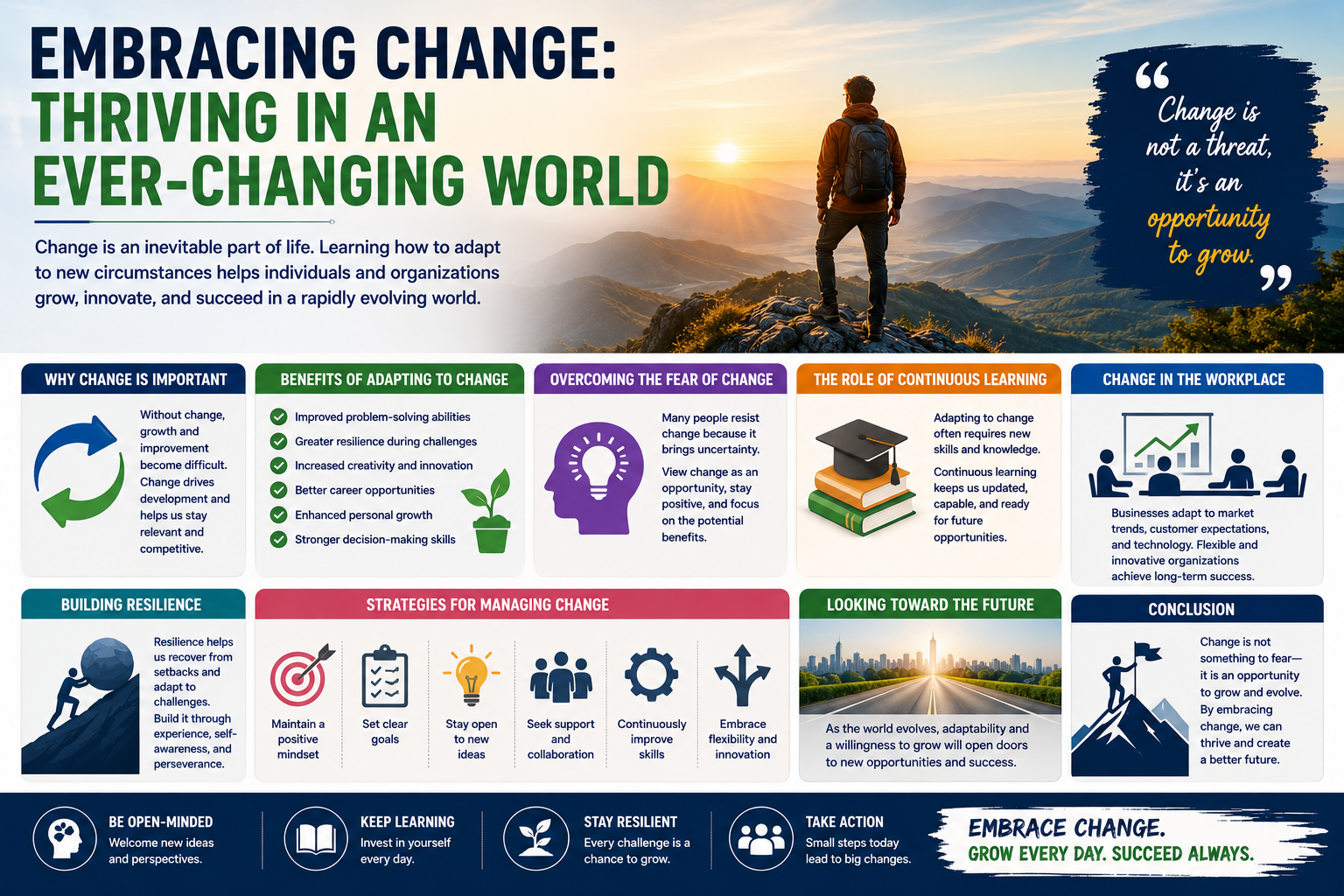
Change is one of the few constants in life. From technological advancements and career shifts to personal growth and global developments, change affects every aspect of our lives. While change can sometimes feel uncertain or challenging, it also creates opportunities for learning, innovation, and progress.
Without change, growth and improvement become difficult. New ideas, experiences, and technologies drive development and help people adapt to evolving environments. Embracing change allows individuals and organizations to remain relevant and competitive.
Being adaptable offers many advantages, including:
Many people resist change because it introduces uncertainty. However, viewing change as an opportunity rather than a threat can help reduce anxiety and build confidence. Maintaining a positive mindset and focusing on potential benefits can make transitions easier.
Adapting to change often requires learning new skills and gaining new knowledge. Continuous learning helps individuals stay updated, improve capabilities, and prepare for future opportunities.
Businesses constantly adapt to market trends, customer expectations, and technological developments. Organizations that embrace innovation and flexibility are better equipped to achieve long-term success.
Resilience is the ability to recover from setbacks and adapt to challenges. Developing resilience through experience, self-awareness, and perseverance helps people navigate change more effectively.
Successful adaptation often includes:
As the world continues to evolve, the ability to adapt and grow will become increasingly valuable. Those who embrace change are more likely to discover new opportunities and achieve lasting success.
Change is not something to fear—it is an opportunity to grow and evolve. By developing adaptability, resilience, and a willingness to learn, individuals and organizations can thrive in an ever-changing world.