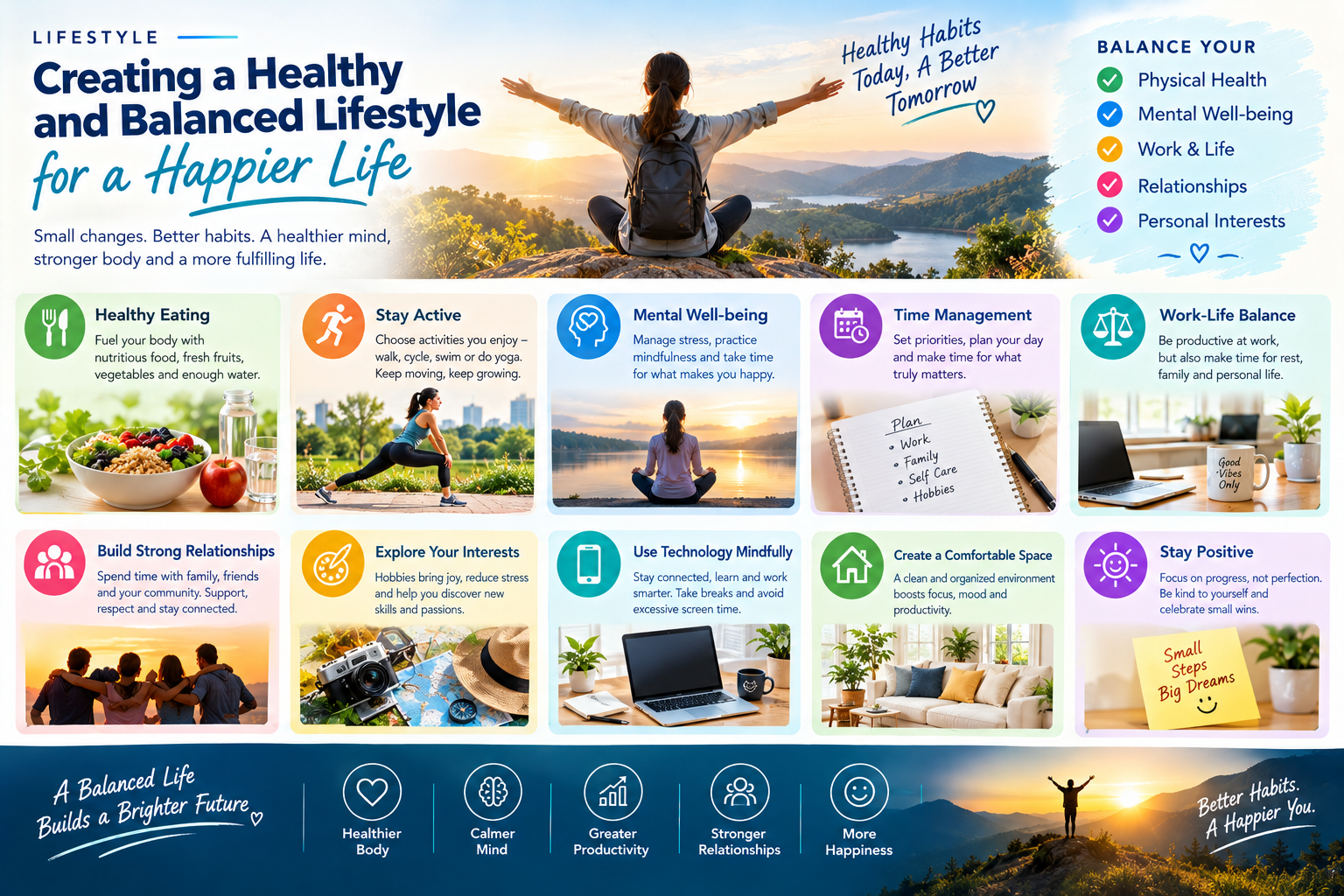
A balanced lifestyle means managing different aspects of life in a way that supports overall well-being. It includes taking care of your body, maintaining emotional health, building meaningful relationships, and making time for work and personal interests.
A balanced lifestyle looks different for everyone. The goal is not to follow a perfect routine but to develop habits that help you feel healthier, more organized, and more satisfied with everyday life.
Small daily habits can make a meaningful difference over time. Maintaining a consistent sleep schedule, eating balanced meals, staying hydrated, and organizing daily tasks can help improve energy levels and productivity.
Rather than changing everything at once, start with a few manageable habits and build on them gradually. Consistency is often more useful than trying to achieve perfection.
Physical activity is an important part of a healthy lifestyle. Walking, cycling, swimming, stretching, dancing, or participating in a favorite sport can help people stay active.
A balanced diet that includes vegetables, fruits, whole grains, protein sources, and other nutritious foods supports the body's needs. Drinking enough water and getting adequate rest are also important.
Choose activities that suit your abilities and preferences so that healthy routines are easier to maintain over time.
Mental well-being is just as important as physical health. Everyday responsibilities, work pressure, and personal challenges can sometimes feel overwhelming.
Taking breaks, practicing relaxation techniques, spending time outdoors, and talking with trusted people can help manage everyday stress.
It is also important to recognize personal limits and seek professional support when emotional difficulties become persistent or interfere with daily activities.
Good time management helps people balance responsibilities without feeling constantly rushed. Planning the day, setting priorities, and breaking large tasks into smaller steps can make everyday activities more manageable.
Consider creating a simple daily schedule that includes work, personal responsibilities, exercise, relaxation, and social time.
Allow some flexibility for unexpected events. A useful routine should support your life rather than make every moment feel like another obligation.
Work is an important part of life, but it should not leave people without time for rest, relationships, and personal interests.
Setting reasonable work hours, taking regular breaks, and avoiding unnecessary after-hours tasks can help create healthier boundaries.
Employers and employees can also support work-life balance through clear communication, realistic expectations, and flexible working arrangements where possible.
Making time for life outside work can help people return to their responsibilities with greater focus and motivation.
Positive relationships contribute to a sense of belonging and support. Spending time with family, friends, colleagues, and community members can help strengthen these connections.
Simple activities such as sharing meals, having honest conversations, celebrating achievements, or checking in with loved ones can make relationships stronger.
Healthy relationships also require respect, communication, and appropriate boundaries. Giving others attention while taking care of your own needs helps maintain more balanced connections.
Hobbies provide opportunities to relax, learn new skills, and enjoy activities outside everyday responsibilities.
Reading, gardening, cooking, photography, music, travel, sports, and creative projects can bring enjoyment and help people discover new interests.
You do not need expensive equipment or large amounts of free time to begin a hobby. Even a few minutes spent doing something enjoyable can add variety to your routine.
Technology makes communication, learning, work, and entertainment more accessible. However, spending too much time on screens can interfere with sleep, concentration, and face-to-face interactions.
A mindful approach to technology can help you benefit from digital tools without allowing them to dominate your day.
Try turning off unnecessary notifications, taking screen breaks, avoiding excessive scrolling, and setting aside device-free time during meals or before bed.
Your surroundings can influence your mood, comfort, and daily routines. A clean, organized, and welcoming environment can make everyday activities easier.
Simple improvements include organizing frequently used items, keeping workspaces tidy, adding plants, improving lighting, and creating a comfortable place to rest.
You do not need to redesign your entire home. Small changes that make your space more practical and enjoyable can have a positive effect.
A positive mindset does not mean ignoring problems or pretending everything is perfect. It means approaching challenges with patience, realistic expectations, and a willingness to learn.
Setting achievable goals, recognizing personal progress, and treating mistakes as learning opportunities can help build confidence.
Avoid comparing your everyday life with carefully selected moments shared on social media. Everyone has different circumstances, responsibilities, and challenges.
Focus on your own progress and celebrate improvements, even when they seem small.
A healthy lifestyle should be realistic enough to maintain over time. Strict routines that do not fit your circumstances can become difficult to follow.
Start by identifying one or two areas you would like to improve. Set achievable goals, review your progress, and adjust your habits when necessary.
Remember that life changes. A routine that works during one period may need to change when your responsibilities, schedule, or priorities shift.
Flexibility and consistency can help you maintain positive habits through different stages of life.
Creating a healthy and balanced lifestyle involves taking care of your physical health, supporting your mental well-being, managing time effectively, and nurturing meaningful relationships.
You do not need to make major changes overnight. Small, consistent improvements can help create a more organized, enjoyable, and fulfilling daily life.
By understanding your needs, making time for what matters, and developing habits that suit your circumstances, you can build a lifestyle that supports long-term well-being and happiness.