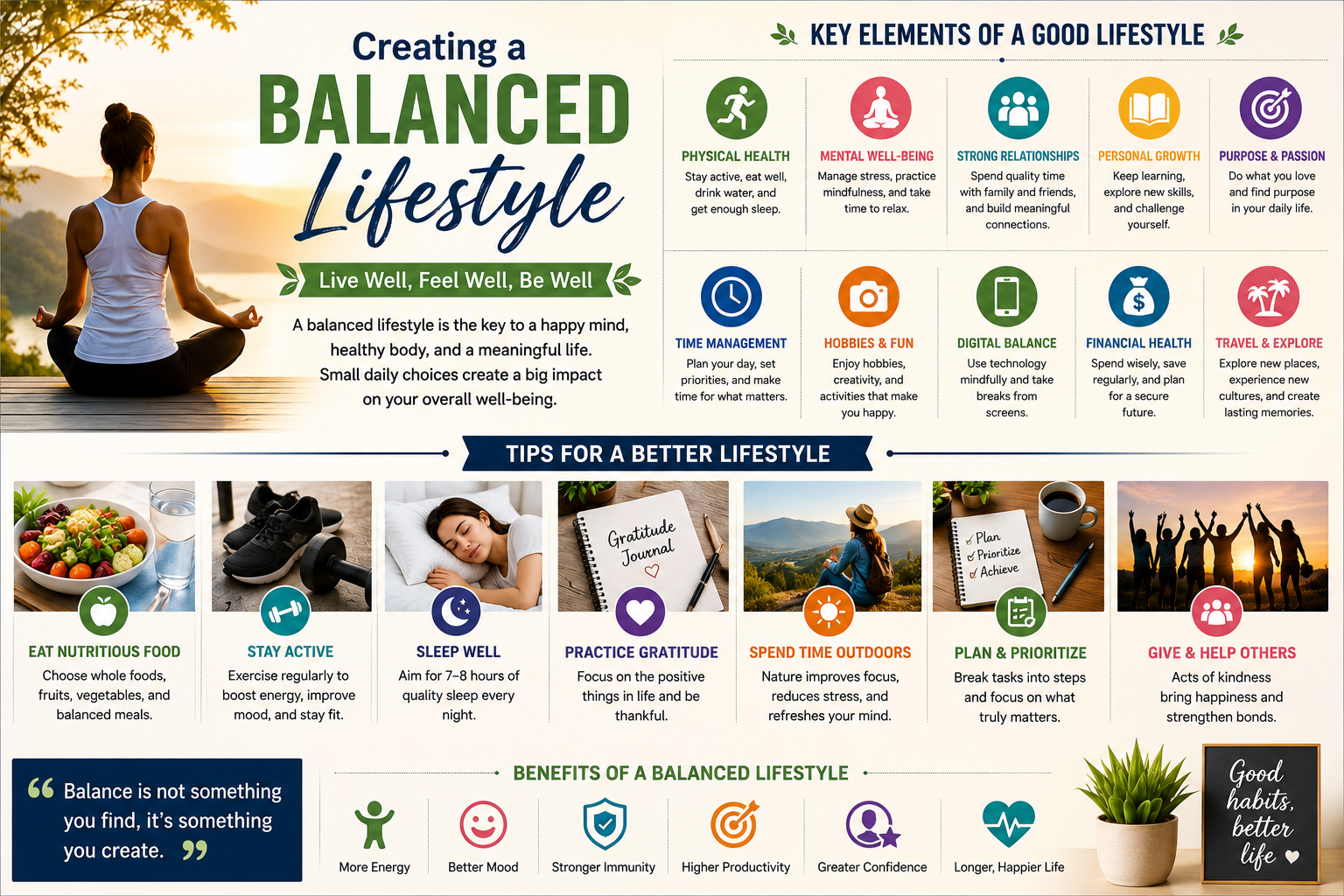
Lifestyle is more than a daily routine. It reflects how we manage our time, health, relationships, work, interests, and personal goals. In today's busy world, maintaining a balanced lifestyle can help people stay productive while also making time for relaxation, personal growth, and meaningful experiences.
Healthy habits are an important foundation of a good lifestyle. Eating nutritious food, staying physically active, drinking enough water, and getting adequate rest can support energy and productivity. Simple activities such as walking, exercising, or spending time outdoors can become valuable parts of a daily routine.
Time management helps create a better balance between responsibilities and personal activities. Setting priorities, creating realistic schedules, and avoiding unnecessary distractions can make daily tasks easier to manage. Leaving time for relaxation and hobbies is equally important.
Mental well-being plays an important role in a fulfilling lifestyle. Reading, listening to music, practicing mindfulness, enjoying hobbies, and taking regular breaks can provide opportunities to relax. Learning to recognize when it is time to slow down can help create a more sustainable routine.
Family, friends, colleagues, and communities can have a positive influence on everyday life. Spending quality time with people, communicating openly, and supporting one another can strengthen relationships and create a sense of connection and belonging.
Hobbies provide an opportunity to explore interests outside work and other responsibilities. Photography, cooking, gardening, traveling, sports, reading, art, and creative activities can make everyday life more enjoyable while providing opportunities to learn new skills.
Technology can make life more convenient through productivity tools, communication platforms, entertainment, and online learning. However, excessive screen time can become distracting. Setting reasonable boundaries around devices and social media can help maintain a healthier relationship with technology.
A fulfilling lifestyle includes opportunities for continuous learning. Reading books, developing professional skills, learning a new language, taking courses, or exploring new interests can encourage personal growth and confidence.
The environment around us can influence productivity and mood. Keeping living and working spaces clean, organized, and comfortable can make daily activities more enjoyable. Even small improvements to a personal space can create a positive difference.
Travel and new experiences can provide opportunities to discover different cultures, meet new people, and create lasting memories. Exploring new places does not always require extensive travel; local activities and weekend experiences can also provide a refreshing change from everyday routines.
Managing personal finances is another important part of a balanced lifestyle. Creating a budget, tracking expenses, saving regularly, and making thoughtful purchasing decisions can reduce financial stress and support long-term goals.
A balanced lifestyle does not require perfection or major changes. It is created through small, consistent choices that support health, relationships, productivity, personal growth, and happiness. By managing time effectively, developing healthy habits, staying connected with others, enjoying meaningful activities, and making mindful decisions, anyone can create a lifestyle that feels more balanced and fulfilling.